In an increasingly interconnected yet perilous digital landscape, the demand for robust online security, privacy, and uncompromised performance has never been more critical. Traditional Virtual Private Networks (VPNs) have long served as the bedrock of digital defense, encrypting data and masking IP addresses. However, as cyber threats evolve and internet infrastructure grows more complex, the limitations of conventional VPNs are becoming apparent. Enter the smart VPN with AI routing – a revolutionary paradigm shift that integrates artificial intelligence to deliver an unprecedented level of optimization, security, and user experience. This advanced technology isn’t merely an upgrade; it represents the next generation of digital freedom and protection, dynamically adapting to network conditions and user needs in real-time.
This article delves deep into the intricate workings, profound benefits, and transformative potential of smart VPNs powered by AI routing. We will explore how machine learning algorithms are redefining network optimization, enhancing cybersecurity, and paving the way for a truly intelligent internet experience.
The Evolution of Digital Defense: From Basic Encryption to Intelligent Routing
For decades, the core function of a VPN has been twofold: to create a secure, encrypted tunnel between a user’s device and a VPN server, and to mask the user’s real IP address. This fundamental technology has been instrumental in safeguarding online privacy, bypassing geo-restrictions, and securing data on public Wi-Fi networks. However, traditional VPNs often operate on a static server selection model. Users typically choose a server location, and their traffic is routed through it, regardless of real-time network congestion, server load, or the most efficient path to their desired destination.
Limitations of Conventional VPNs
While effective, traditional VPNs come with inherent challenges:
- Performance Bottlenecks: Choosing a distant or overloaded server can lead to significant latency reduction, slower internet speed, and buffering, particularly for streaming or gaming.
- Suboptimal Routing: Without intelligence, traffic might be routed through inefficient paths, increasing connection times and reducing overall efficiency.
- Reactive Security: Most traditional VPNs offer static security features, which, while strong, may not adapt quickly to emerging threats.
- Manual Configuration: Users often have to manually select servers, which can be cumbersome and doesn’t guarantee the best connection.
The digital world demands more than just basic encryption; it requires intelligence, adaptability, and foresight. This is precisely where the innovation of AI routing transforms the VPN landscape.
What Defines a Smart VPN? Beyond the Basics
A smart VPN distinguishes itself from its predecessors by incorporating advanced features that go beyond simple encryption and IP masking. It’s about intelligence, automation, and a proactive approach to online security and performance. While the term “smart VPN” can encompass various enhancements, its most defining characteristic, and the focus of this discourse, is the integration of AI routing.
Core Characteristics of a Smart VPN
- Intelligent Server Selection: Automatically connects to the optimal server based on various metrics.
- Adaptive Protocols: Can switch between VPN protocols (e.g., OpenVPN, WireGuard, IKEv2) to ensure the best balance of speed and security.
- Dynamic Threat Detection: Employs machine learning to identify and mitigate emerging cyber threats in real-time.
- Optimized Performance: Prioritizes speed and low latency for specific activities like streaming or gaming.
- Enhanced Privacy Features: Often includes advanced features like multi-hop VPN, obfuscated servers, and robust no-log policy enforcement.
The “smart” aspect truly shines when AI takes the reins of traffic management, elevating the VPN from a static tool to a dynamic, intelligent guardian of your digital life.
The Game-Changer: AI Routing Explained
At the heart of a smart VPN with AI routing lies the sophisticated application of artificial intelligence and machine learning algorithms. Unlike static routing tables, AI routing is a dynamic process that continuously analyzes network conditions, user behavior, and server performance to determine the most efficient and secure path for your data.
How AI Optimizes Connections
Imagine your internet traffic as a vehicle on a vast network of roads. A traditional VPN picks a single road (server) and sticks to it. An AI-powered VPN, however, acts as a highly intelligent GPS, constantly monitoring traffic jams, road closures, and even predicting future congestion to guide your vehicle along the fastest, safest, and most efficient route in real-time analytics.
This optimization is achieved through several key mechanisms:
- Real-Time Network Monitoring: AI systems continuously collect data on server load, network congestion, packet loss, latency, and bandwidth availability across thousands of VPN servers globally.
- Predictive Analysis: Using machine learning, the AI can analyze historical data and current trends to predict future network conditions, allowing it to proactively switch routes before congestion even occurs.
- Dynamic Server Selection: Instead of a user manually picking a server, the AI automatically selects the optimal server location and specific server instance within that location based on the user’s intended destination, current network conditions, and desired performance metrics (e.g., lowest latency for gaming, highest bandwidth for streaming).
- Adaptive Routing Paths: The AI doesn’t just pick a server; it can also dynamically adjust the actual routing path *between* the VPN server and the final destination, avoiding bottlenecks on the internet backbone itself.
- User-Specific Optimization: Some advanced AI routing systems can learn user preferences, optimizing connections based on typical usage patterns, whether it’s prioritizing secure business communications or high-speed media consumption.
This intelligent orchestration means your connection is always optimized for speed, reliability, and security, without any manual intervention from your side.
Key Features and Advantages of Smart VPNs with AI Routing
The integration of AI routing transforms the VPN experience, offering a multitude of benefits that address the shortcomings of traditional services and elevate digital interaction.
Optimized Performance: Speed, Reduced Latency, and Bandwidth Management
One of the most immediate and tangible benefits of AI routing is a dramatic improvement in performance.
- Blazing Fast Speeds: By intelligently selecting the least congested and geographically closest (or most efficient) server, AI routing minimizes data travel time, leading to significantly faster download and upload speeds. This is crucial for activities requiring high bandwidth, such as 4K streaming or large file transfers.
- Reduced Latency: For gamers, traders, or anyone requiring instantaneous responses, latency reduction is paramount. AI routing identifies paths with minimal delays, ensuring a smooth, responsive online experience devoid of frustrating lags.
- Intelligent Bandwidth Management: The AI can dynamically allocate bandwidth and route traffic to avoid overutilized servers, ensuring consistent performance even during peak hours. This proactive traffic management prevents slowdowns before they impact the user.
Enhanced Security & Privacy: Dynamic Threat Detection and Adaptive Encryption
AI isn’t just about speed; it’s a formidable ally in the fight for cybersecurity and data privacy.
- Dynamic Threat Detection: Machine learning algorithms can analyze network traffic patterns in real-time to identify anomalous behavior indicative of cyber threats, such as malware, phishing attempts, or DDoS attacks. This allows the VPN to proactively block malicious traffic or alert the user.
- Adaptive Encryption: While less common, some advanced systems could potentially adapt encryption strengths or protocols based on the perceived threat level or network conditions, balancing security with performance.
- Stronger Anonymity: By constantly optimizing server routes and potentially rotating IP addresses more intelligently, AI routing can make it even harder for third parties to track your online activities, bolstering your digital footprint protection.
Intelligent Geo-Unblocking: Bypassing Restrictions More Effectively
Geo-restrictions are a constant challenge for global internet users. AI routing offers a more sophisticated solution.
- Smarter Server Selection for Content Access: When attempting to access geo-restricted content, the AI can intelligently select servers that are known to be effective at bypassing those specific restrictions, or dynamically switch if a server becomes blocked. This is far more effective than manually trying different servers.
- Reduced Detection Risk: By dynamically adjusting routing and potentially leveraging obfuscated server technologies, AI-powered VPNs can make it harder for content providers to detect and block VPN usage, ensuring more consistent access to global content.
Seamless User Experience: Automation and Ease of Use
The beauty of AI routing lies in its automation, translating into an incredibly user-friendly experience.
- Automatic Server Selection: Users no longer need to spend time researching or manually selecting servers. The AI does all the heavy lifting, ensuring the optimal connection with minimal effort.
- “Set It and Forget It” Security: Once configured, a smart VPN with AI routing largely operates autonomously, continuously optimizing and securing your connection in the background.
- Personalized Performance: Over time, the AI can learn your specific usage patterns and preferences, further tailoring the VPN’s performance to your individual needs.
Indirect Cost-Efficiency: Reduced Data Waste and Improved Productivity
While not a direct monetary saving on the VPN itself, the efficiency gains can lead to indirect cost benefits.
- Reduced Data Waste: Optimized routing means less retransmission of data due to dropped packets or poor connections, potentially saving on metered data plans.
- Improved Productivity: For businesses and remote workers, reliable, fast, and secure connections mean less downtime, fewer interruptions, and overall higher productivity.
How AI Routing Works Under the Hood: A Deeper Dive
To appreciate the sophistication of a smart VPN with AI routing, it’s helpful to understand the underlying processes that enable its intelligence.
Data Collection and Ingestion
The AI’s journey begins with extensive data collection. VPN providers with AI routing capabilities deploy sophisticated monitoring systems across their global server network and the broader internet. This data includes:
- Server Metrics: CPU load, RAM usage, available bandwidth, number of active connections.
- Network Performance Indicators: Latency (ping times), packet loss rates, jitter, throughput.
- Internet Backbone Conditions: Real-time traffic congestion on major internet exchange points and peering links.
- Geo-restriction Evasion Success Rates: Historical data on which servers successfully bypass specific content blocks.
- User-Specific Data (Anonymized): Aggregate data on user traffic patterns, preferred content types, and application usage (e.g., streaming vs. gaming), all while respecting strict privacy policies and ensuring anonymity.
Analysis and Machine Learning Algorithms
Once collected, this torrent of data is fed into powerful machine learning algorithms. These algorithms are designed to:
- Identify Patterns: Recognize recurring patterns in network congestion, server performance, and user behavior.
- Predict Future States: Based on identified patterns, predict how network conditions might evolve in the near future.
- Evaluate Optimal Paths: Analyze countless possible routing paths and server combinations to determine the most efficient one based on various criteria (speed, latency, security, geo-unblocking success). This often involves complex graph theory and optimization algorithms.
- Dynamic Adjustment: Continuously re-evaluate and adjust routing decisions as network conditions change, ensuring the connection remains optimal.
Decision-Making and Execution
With the optimal path identified, the AI system makes a decision and executes it. This might involve:
- Automatic Server Switching: Seamlessly migrating a user’s connection to a different, less congested, or faster server without interrupting their activity.
- Route Optimization: Instructing the network infrastructure to route traffic through specific internet service providers or peering points that offer better performance.
- Protocol Switching: In some cases, the AI might even recommend or automatically switch to a different VPN protocol if it detects that one offers superior performance or security for the current network conditions.
Continuous Learning and Refinement
Crucially, AI routing is not a static system. It’s a continuous learning loop. Every new piece of data, every successful or unsuccessful routing decision, feeds back into the machine learning models, further refining their accuracy and predictive capabilities. This iterative process ensures that the smart VPN becomes even more intelligent and effective over time, constantly adapting to the ever-changing dynamics of the internet.
Use Cases and Applications: Where Smart VPNs Shine
The benefits of a smart VPN with AI routing extend across a wide spectrum of online activities, enhancing virtually every aspect of digital life.
High-Performance Gaming
For competitive online gamers, every millisecond counts. AI routing ensures the lowest possible latency reduction and stable connections, minimizing lag and preventing frustrating disconnections. The AI automatically connects to servers optimized for gaming traffic, often bypassing congested routes that would typically slow down reactions.
Seamless Streaming and Content Consumption
Buffering is the bane of any streamer’s existence. A smart VPN intelligently routes your traffic to servers with ample bandwidth and low congestion, ensuring a smooth, high-definition streaming experience. Furthermore, its ability to intelligently bypass geo-restrictions makes accessing global content libraries more reliable than ever.
Secure and Efficient Business Operations
Remote work and global collaboration demand robust security and reliable connectivity. Businesses can leverage AI-powered VPNs to secure sensitive data transmissions, ensure fast access to cloud resources, and provide employees with optimized connections, regardless of their physical location. This is vital for maintaining productivity and protecting corporate assets.
General Browsing and Everyday Use
Even for casual browsing, a smart VPN enhances the experience. Faster page loads, improved responsiveness, and robust protection against everyday cyber threats make for a more pleasant and secure journey across the internet. The “set it and forget it” nature means users get premium performance and security without constant manual adjustments.
Journalists, Activists, and Privacy Advocates
For those operating in environments with strict internet censorship or high surveillance, the adaptive and intelligent nature of AI routing can be a lifeline. It can dynamically find ways to circumvent blocks and maintain anonymity, offering a higher degree of digital freedom and protection against state-sponsored monitoring.
Challenges and Considerations for AI-Powered VPNs
While the advantages are compelling, it’s important to acknowledge some challenges and considerations associated with smart VPNs with AI routing.
Complexity of Implementation and Maintenance
Developing and maintaining a sophisticated AI routing infrastructure requires significant technical expertise, computational resources, and a vast global server network. This complexity can translate into higher operational costs for providers.
Trust in Providers and Data Collection
For AI to function effectively, it needs data. While providers emphasize anonymized data collection, users must still place a high degree of trust in their chosen VPN service regarding their privacy policy and how data is handled. A stringent no-log policy is even more critical for AI-powered VPNs.
Potential for Resource Intensity
The continuous monitoring, analysis, and decision-making by AI algorithms can be resource-intensive, both for the provider’s infrastructure and potentially, to a minor extent, for the user’s device if certain AI components run locally.
Cost of Advanced Services
Given the advanced technology and infrastructure required, smart VPNs with AI routing may come at a higher subscription cost compared to basic VPN services. Users must weigh the enhanced performance and security against the price point.
Choosing the Right Smart VPN with AI Routing
Selecting a smart VPN with AI routing requires careful consideration to ensure it meets your specific needs for security, privacy, and performance.
Provider Reputation and Trust
Opt for providers with a proven track record of transparency, strong security practices, and a clear no-log policy. Independent audits of their infrastructure and policies are a strong indicator of trustworthiness.
Features Offered Beyond AI Routing
While AI routing is a standout feature, also look for other essential VPN functionalities:
- Strong Encryption: AES-256 encryption is standard.
- Reliable Kill Switch: To prevent data leaks if the VPN connection drops.
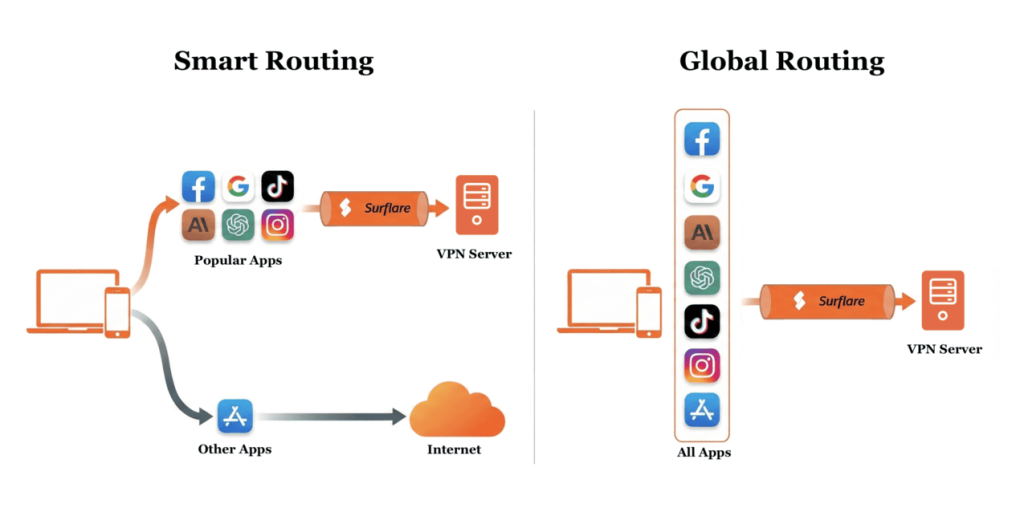
- Split Tunneling: To choose which apps use the VPN and which don’t.
- Multi-hop/Double VPN: For extra layers of encryption and anonymity.
- Obfuscated Servers: To hide VPN usage from deep packet inspection.
Server Network Size and Distribution
A large and globally distributed server network provides the AI with more options for optimal routing, leading to better performance and more reliable geo-unblocking.
Privacy Policy and Data Handling
Thoroughly review the provider’s privacy policy. Ensure they have a strict no-log policy and are transparent about any data collected for AI optimization, confirming it’s anonymized and used solely for service improvement.
Customer Support
Even with intelligent automation, responsive and knowledgeable customer support is vital for troubleshooting or general inquiries.
Pricing and Value Proposition
Compare pricing plans and assess the value proposition. While potentially more expensive, the enhanced security and performance of an AI-powered VPN often justify the investment for serious users.
The Future of VPNs: Beyond AI Routing
The integration of AI into VPN technology is just the beginning. The future promises even more sophisticated advancements:
- Hyper-Personalized Routing: AI systems will likely become even more adept at learning individual user habits and preferences, offering truly bespoke routing solutions.
- Proactive Threat Intelligence: AI could evolve to not just detect but predict novel cyber threats before they emerge, adapting defenses proactively.
- Quantum-Resistant Encryption: As quantum computing advances, AI may play a role in dynamically implementing and managing quantum-resistant encryption protocols.
- Integration with Edge Computing: AI routing could extend to the edge of the network, optimizing connections even closer to the user’s device.
- Decentralized AI VPNs: The concept of decentralized VPNs (dVPNs) combined with AI could lead to highly resilient, censorship-resistant networks where AI manages routing across a distributed mesh of user-contributed nodes.
The trajectory is clear: VPNs are moving from static security tools to dynamic, intelligent, and autonomous guardians of our digital lives, with AI at the helm.
Conclusion: Embracing the Intelligent Digital Guardian
The advent of a smart VPN with AI routing marks a pivotal moment in the evolution of internet security and performance. By harnessing the power of artificial intelligence and machine learning algorithms, these next-generation VPNs transcend the limitations of their predecessors, offering unparalleled speed, reduced latency, enhanced cybersecurity, and a truly seamless user experience. No longer are users forced to compromise between security and speed, or grapple with manual server selections.
From buffering-free streaming and lag-free gaming to robust business security and unwavering personal privacy, AI routing intelligently optimizes every facet of your online journey. While challenges remain, the clear trajectory points towards a future where intelligent automation is synonymous with digital freedom and protection. Embracing a smart VPN with AI routing isn’t just an upgrade; it’s an investment in a more secure, efficient, and intelligent future online.
Q&A Section: Your Questions Answered About Smart VPNs with AI Routing
Q1: What is the primary difference between a traditional VPN and a smart VPN with AI routing?
A1: The primary difference lies in intelligence and automation. A traditional VPN offers static encryption and IP masking, often requiring manual server selection. A smart VPN with AI routing uses machine learning algorithms to dynamically analyze network conditions, user needs, and server performance in real-time analytics to automatically select the most optimal and secure routing path, ensuring superior speed, lower latency reduction, and enhanced security without user intervention.
Q2: How does AI routing improve internet speed and reduce latency?
A2: AI routing improves speed and reduces latency by constantly monitoring global server loads, network congestion, and packet loss. It then uses this data to predict the fastest and most efficient route for your data, bypassing bottlenecks and overloaded servers. For instance, it can automatically connect you to a server that offers the lowest ping for gaming or the highest bandwidth management for streaming, ensuring optimal internet speed.
Q3: Is a smart VPN with AI routing more secure than a regular VPN?
A3: Yes, generally. While both offer encryption, a smart VPN with AI routing often incorporates dynamic threat detection capabilities. Its machine learning algorithms can identify and mitigate emerging cyber threats, anomalous traffic patterns, and potential vulnerabilities in real-time. This proactive approach adds an extra layer of cybersecurity beyond the static defenses of a traditional VPN.
Q4: Does AI routing collect my personal data?
A4: For AI routing to function, it needs to collect data on network conditions, server performance, and potentially anonymized, aggregated user traffic patterns to make intelligent decisions. Reputable providers, however, adhere to strict no-log policy guidelines and ensure that any data collected is anonymized, not personally identifiable, and used solely for service optimization. Always check the provider’s privacy policy carefully.
Q5: Can a smart VPN with AI routing help bypass geo-restrictions more effectively?
A5: Yes. AI routing can be more effective at bypassing geo-restrictions because it can intelligently select servers that are known to work with specific streaming services or content platforms. If a server becomes blocked, the AI can quickly identify and switch to an alternative, more effective server, offering more consistent access to global content and enhancing digital freedom.
Q6: Are smart VPNs with AI routing more expensive?
A6: Due to the advanced technology, significant infrastructure, and ongoing development required for AI integration and network optimization, smart VPNs with AI routing may indeed come at a slightly higher subscription cost compared to basic, traditional VPN services. However, the enhanced performance, security, and user experience often justify the investment for users who prioritize these benefits.
Q7: What are some LSI keywords related to ‘smart vpn with ai routing’?
A7: Relevant LSI keywords include network optimization, latency reduction, data privacy, cybersecurity, dynamic routing, machine learning algorithms, encryption protocols, internet speed, geo-restrictions, online security, digital footprint, next-generation VPN, adaptive routing, threat detection, bandwidth management, real-time analytics, server load, packet loss, anonymity, digital freedom, internet censorship, VPN protocols (OpenVPN, WireGuard), no-log policy, kill switch, split tunneling, IP address masking, data encryption, traffic management, predictive analysis, and user experience.