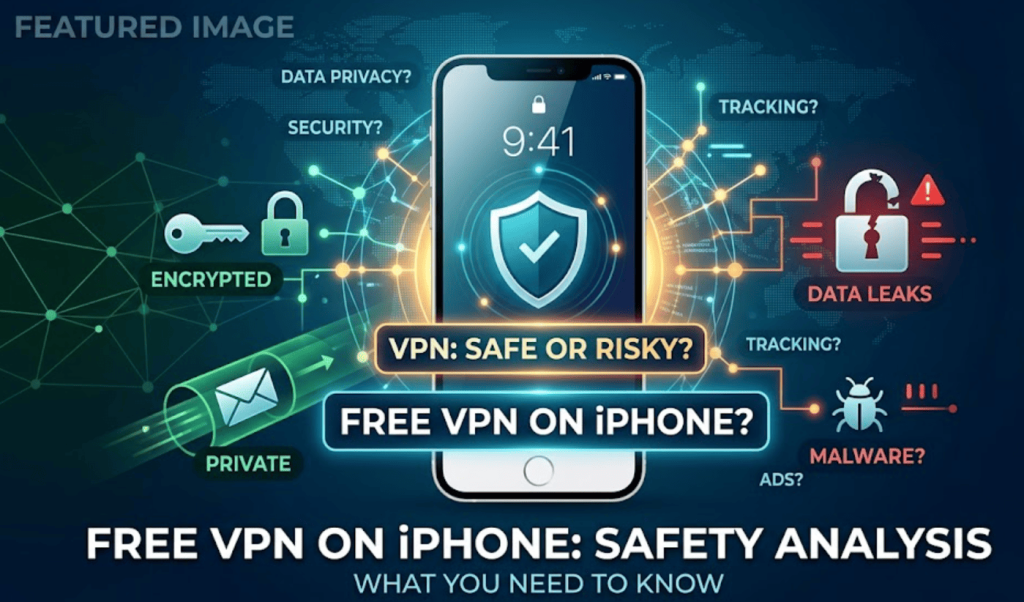
Is It Safe to Use Free VPN on iPhone? Unpacking the Digital Dilemma
In our increasingly interconnected world, where digital footprints are meticulously tracked and personal data is a coveted commodity, the allure of a Virtual Private Network (VPN) has never been stronger. For iPhone users, renowned for their device’s robust security features, the promise of enhanced privacy and unrestricted internet access often leads to a crucial question: “Is it safe to use a free VPN on my iPhone?” It’s a query that resonates with millions seeking to navigate the digital landscape with greater anonymity and freedom, especially when confronted with geo-restrictions or the perceived vulnerabilities of public Wi-Fi networks.
The concept of a VPN is elegantly simple: it creates a secure, encrypted tunnel between your device and the internet, masking your IP address and encrypting your online traffic. This effectively shields your browsing activities, location, and personal data from prying eyes, be they internet service providers, government agencies, or malicious actors. For a small monthly fee, reputable paid VPN services deliver on this promise with unwavering commitment to user privacy and security. However, the word “free” acts as a powerful magnet, drawing in users who might overlook the intricate mechanisms and potential compromises that underpin such offerings.
This comprehensive article delves deep into the complexities surrounding free VPNs for iPhones. We will dissect the business models that allow these services to exist without direct payment, expose the hidden cybersecurity risks and privacy concerns they often entail, and provide a balanced perspective on whether the convenience of “free” truly outweighs the potential cost to your digital well-being. By the end, you’ll be equipped with the knowledge to make an informed decision, understanding not just the technicalities, but the profound implications for your online security and personal data on your beloved iPhone.
The Allure of “Free”: Understanding the Appeal of Free VPNs for iPhone Users
The human inclination towards anything offered without a direct monetary cost is undeniable, and the digital realm is no exception. For iPhone users, the proposition of a free VPN often seems like a no-brainer, promising a suite of benefits without dipping into one’s wallet. This powerful appeal is rooted in several key factors that tap into common user desires and frustrations.
Instant Gratification and Accessibility
One of the primary drivers behind the popularity of free VPNs is their immediate accessibility. A quick search on the App Store reveals countless options, often with enticing promises of “unlimited,” “fast,” and “secure” connections. The download and installation process is typically straightforward, requiring minimal technical know-how. This ease of entry means users can almost instantly begin using the service, fulfilling an immediate need for perceived security or access without the friction of research, comparison, or subscription payments. For many, the ability to simply tap and connect is a powerful incentive, especially when faced with a sudden need to protect data on an unsecured public Wi-Fi network or bypass a content block.
Bypassing Geo-Restrictions and Content Blocks
Another significant draw for free VPNs is their perceived ability to circumvent geo-restrictions. Whether it’s accessing streaming content unavailable in one’s region, viewing blocked websites in certain countries, or getting around workplace/school network firewalls, a VPN offers the tantalizing prospect of a borderless internet experience. Users often seek out free VPNs specifically for this purpose, hoping to unlock a world of content and information that would otherwise be inaccessible. The idea of “tricking” the internet into believing you’re in a different location, all without a subscription, is a compelling offer for many digital explorers.
Perceived Privacy on Public Wi-Fi
Public Wi-Fi networks, ubiquitous in cafes, airports, and hotels, are notorious for their security vulnerabilities. Without proper encryption, data transmitted over these networks can be easily intercepted by malicious actors, leading to potential data breaches, identity theft, and other cyber threats. Many iPhone users turn to free VPNs as a quick and easy solution to bolster their online security when connected to such networks. The belief is that by routing their traffic through a VPN, even a free one, their personal data—from emails and banking details to social media interactions—will be shielded from eavesdroppers. This perception of enhanced privacy and security, often without a full understanding of the underlying technology, fuels the demand for free VPN services.
Deconstructing the “Free” Model: How Do Free VPNs Sustain Themselves?
The adage “there’s no such thing as a free lunch” holds particularly true in the digital realm. Operating a VPN service, even a basic one, incurs significant costs: server infrastructure, bandwidth, development, maintenance, and customer support all require substantial investment. So, if users aren’t paying a subscription fee, how do free VPNs manage to stay afloat? Understanding their business models is crucial to grasping the potential risks involved.
Data Collection and Monetization
This is arguably the most prevalent and concerning business model for many free VPN providers. If you’re not paying with money, you’re likely paying with your data. These services often collect extensive user data, including browsing habits, visited websites, connection timestamps, device information, and even approximate geographical locations. This valuable data is then aggregated, anonymized (or sometimes not), and sold to third-party advertisers, data brokers, or analytics companies. This allows these entities to build detailed user profiles for targeted advertising, market research, and other data-driven initiatives. While some users might dismiss this as a minor inconvenience, the sale of personal data fundamentally undermines the very purpose of using a VPN for privacy.
Adware and Malicious Software
Another common method for monetization is through the integration of adware and even more malicious software. Some free VPN apps might inject advertisements directly into your browsing experience, pop up intrusive ads, or redirect your browser to sponsored pages. More alarmingly, some have been found to bundle spyware or other malware within their applications. This malicious software can track your activities beyond the VPN connection, steal sensitive information, or even compromise your iPhone’s overall security. Users, in their quest for free privacy, inadvertently open the door to far greater security vulnerabilities, transforming their device into a potential target for cybercriminals.
Upselling Premium Services
Many free VPNs operate on a “freemium” model. They offer a basic, often highly restricted, free service to entice users, hoping to convert them into paying subscribers for a premium version. The free tier typically comes with severe limitations: slower speeds, limited data caps (e.g., 500MB per month), a restricted number of server locations, and a lack of advanced features like a kill switch or dedicated customer support. The user experience is deliberately hampered to encourage an upgrade. While this model isn’t inherently malicious, the free version often provides such a subpar experience that it barely offers any real privacy or security benefits, acting more as a marketing funnel than a robust service.
Limited Features and Performance Constraints
To cut costs and differentiate from paid tiers, free VPNs inherently offer a stripped-down experience. They often employ weaker encryption protocols, have fewer servers (leading to overcrowding and slow speeds), and lack essential security features. This isn’t a direct monetization strategy but rather a consequence of their “free” nature. The limited performance and lack of critical security safeguards mean that while you might technically be using a VPN, the level of protection and privacy it affords is significantly compromised, making it a potentially false sense of security.
Unveiling the Hidden Dangers: Cybersecurity Risks and Privacy Concerns
The true cost of a “free” VPN often manifests in compromised security and eroded privacy. While the immediate appeal is strong, the underlying risks can have severe long-term consequences for your digital life on your iPhone. Understanding these dangers is paramount to making an informed decision.
Weak Encryption and Data Leaks
Reputable VPNs utilize strong, military-grade encryption protocols like AES-256 to secure your data. Many free VPNs, however, opt for weaker, less secure encryption standards or even entirely forgo proper encryption to save on processing power and bandwidth costs. This significantly reduces the effectiveness of the VPN, making your data vulnerable to interception by sophisticated attackers, especially on unsecured public Wi-Fi networks. A weak encryption standard is akin to locking your front door with a flimsy padlock – it might deter the casual passerby, but it offers little resistance to anyone determined to gain entry. Data leaks, where your real IP address or DNS requests are exposed despite using the VPN, are also a common vulnerability in poorly implemented free services.
Logging Policies: Your Digital Footprint Exposed
A core promise of any good VPN is a strict “no-log policy,” meaning the service does not record your online activities, connection data, or any information that could be used to identify you. Free VPNs, as discussed, frequently operate on a data-monetization model. This means they often log extensive amounts of your activity, from the websites you visit and the apps you use to your connection times and bandwidth consumption. Their privacy policies, if they exist and are comprehensible, often reveal that they collect, store, and even share this data with third parties. This completely defeats the purpose of using a VPN for privacy, as your digital footprint is not only visible to the VPN provider but also potentially to numerous other entities, increasing your exposure to targeted advertising and profiling.
Malware, Adware, and Spyware Infiltration
Perhaps one of the most insidious dangers of free VPNs is the potential for them to act as vectors for malware, adware, and spyware. Some free VPN apps have been found to contain hidden malicious code that can:
- Inject unwanted ads: Disrupting your browsing experience and potentially leading to malicious websites.
- Track your activities: Beyond the VPN tunnel, collecting data on your device usage, installed apps, and location.
- Steal sensitive information: Including login credentials, financial details, and personal files.
- Compromise device security: Opening backdoors for further attacks or even turning your iPhone into part of a botnet.
The risk of downloading a seemingly innocuous app that secretly compromises your device’s integrity is a significant concern for any iPhone user.
DNS Leaks and IP Address Exposure
A properly functioning VPN routes all your internet traffic, including DNS requests (which translate website names into IP addresses), through its encrypted tunnel. However, many free VPNs suffer from DNS leaks. This occurs when your device inadvertently sends DNS requests outside the VPN tunnel, directly to your internet service provider (ISP) or a third-party DNS server. When this happens, your ISP can see which websites you’re trying to visit, even if your actual traffic is encrypted by the VPN. Similarly, IP address leaks can occur, revealing your true geographical location. These leaks negate the anonymity a VPN is supposed to provide, making your online activities traceable back to you.
Performance Degradation and Battery Drain
While not a direct security risk, the performance impact of free VPNs can be severely frustrating. Due to overcrowded servers, limited bandwidth, and potentially inefficient coding, free VPNs often lead to significantly slower internet speeds, increased latency, and frequent disconnections. This makes streaming, gaming, or even simple browsing a cumbersome experience. Furthermore, running a poorly optimized VPN app in the background can significantly drain your iPhone’s battery life, reducing its overall usability and requiring more frequent charging. This trade-off between convenience and performance is a common complaint among users of free VPN services.
Lack of Transparency and Accountability
Reputable paid VPN providers typically have transparent privacy policies, undergo independent security audits, and have a clear corporate structure with identifiable leadership. Free VPNs, especially those with questionable practices, often lack this level of transparency. Their privacy policies might be vague, difficult to find, or written in legalese designed to obscure their data practices. Many are operated by unknown entities with no clear contact information, making it impossible to hold them accountable if your data is compromised or misused. This lack of accountability means users have little recourse in the event of a security incident.
The iPhone Ecosystem: Specific Considerations for iOS Users
While many of the risks associated with free VPNs are universal, the iPhone’s unique operating system and app ecosystem introduce specific considerations that users should be aware of. Apple prides itself on user privacy and security, but even its robust framework has limits when an app is granted certain permissions.
Apple’s Security Features vs. VPN Vulnerabilities
Apple devices, including iPhones, are built with strong security features from the ground up. iOS provides sandboxing for apps, secure boot processes, and regular security updates to protect users. However, a VPN operates at a fundamental network level, essentially creating a tunnel through which all your device’s internet traffic flows. When you install a VPN app and grant it the necessary permissions, you are entrusting that app with the critical task of managing your network connections. If a free VPN app is malicious or poorly designed, it can bypass some of Apple’s inherent protections by acting as the primary gateway for your data. Apple cannot prevent a VPN app from logging your data or connecting to insecure servers if you’ve granted it permission to function.
App Store Scrutiny: A Shield, But Not Impenetrable
Apple’s App Store has a rigorous review process designed to filter out malicious applications and ensure a certain standard of quality and security. This process does offer a layer of protection, making it less likely for overtly dangerous malware-ridden apps to slip through compared to third-party Android app stores. However, the App Store review is not foolproof. Some free VPNs with questionable data practices or hidden adware have successfully passed the review process. The review process primarily checks for overt malware and adherence to basic guidelines, but it cannot always detect subtle data logging practices, weak encryption implementations, or the sale of user data to third parties, especially if these are vaguely outlined in a complex privacy policy. Users should therefore not rely solely on the App Store’s presence as an absolute guarantee of a free VPN’s trustworthiness.
Battery Life and System Performance Impact
iPhones are optimized for efficiency, delivering powerful performance while maintaining impressive battery life. Running a VPN, especially one that is poorly coded or constantly struggling with unstable connections, can significantly impact both. A free VPN might consume excessive system resources, leading to a noticeable slowdown in other apps and overall device responsiveness. More critically, the continuous encryption and decryption processes, coupled with potential background data transfers (if the VPN is logging or running ads), can rapidly drain your iPhone’s battery. This means you’ll be charging your device more frequently, reducing its portability and convenience, and potentially shortening the overall lifespan of your battery.
Identifying Red Flags: How to Spot a Potentially Risky Free VPN
While the dangers of free VPNs are significant, not all “free” offerings are created equal. Some reputable paid VPNs offer limited free trials or “freemium” versions with transparent policies. The key is to be discerning. Here are some red flags that should immediately raise suspicion when considering a free VPN for your iPhone:
Vague Privacy Policies or Lack Thereof
A reputable VPN service will have a clear, concise, and easily accessible privacy policy that explicitly states what data they collect, why they collect it, how it’s used, and whether it’s shared with third parties. If a free VPN’s privacy policy is difficult to find, filled with legal jargon that obscures rather than clarifies, or simply non-existent, consider it a major red flag. A truly privacy-focused service has nothing to hide about its data handling practices.
Excessive Permissions Requested
When you install an app, especially a VPN, pay close attention to the permissions it requests. While a VPN needs network access, be wary if it asks for unrelated permissions like access to your contacts, photos, microphone, or location services (beyond what’s needed for server selection). These requests are often unnecessary for a VPN’s core functionality and could indicate an intent to collect more data than necessary.
Unrealistic Promises of Speed and Security
Be skeptical of free VPNs that promise “unlimited bandwidth,” “blazing fast speeds,” and “military-grade security” without any caveats. As established, providing a high-quality VPN service is expensive. A truly free service cannot consistently offer premium-level performance and security without some form of compromise. If it sounds too good to be true, it almost certainly is.
Poor Reviews or Lack of Information
Before downloading any app, especially a security-focused one, check its reviews on the App Store. Look for consistent complaints about slow speeds, frequent disconnections, intrusive ads, or suspicious behavior. A lack of reviews, or an abundance of generic, overly positive reviews that seem inorganic, can also be a warning sign. Additionally, research the developer online. If there’s no official website, limited information about the company, or a history of questionable apps, proceed with extreme caution.
Unknown Developers or Suspicious Origin
Many risky free VPNs come from obscure developers with no established reputation in the cybersecurity space. If the developer name is generic, constantly changing, or appears to be a front for another entity, it’s a cause for concern. Trustworthy VPN providers usually have a long-standing history, a clear brand identity, and a commitment to transparency.
The Verdict: Is “Free” Worth the Risk on Your iPhone?
Having dissected the operational models and inherent dangers of free VPNs, the fundamental question remains: is the perceived benefit of “free” truly worth the potential risks to your iPhone’s security and your personal privacy? For the vast majority of users, the answer leans heavily towards a resounding “no.”
Weighing the Trade-offs: Convenience vs. Security
The primary trade-off with free VPNs is convenience versus robust security and privacy. While they offer immediate access to geo-restricted content or a fleeting sense of security on public Wi-Fi, this often comes at the expense of your data, device performance, and overall digital safety. The very purpose of a VPN is to enhance privacy and security; if a service compromises these core tenets to sustain itself, it fundamentally fails in its mission. The minimal benefits offered by most free VPNs are often outweighed by the significant risks of data logging, adware, malware, and weak encryption. For an iPhone user who values the device’s inherent security and personal data protection, this trade-off is simply unacceptable.
When a Free VPN Might (Briefly) Be Acceptable (with extreme caution)
There are extremely limited scenarios where a free VPN, specifically a reputable “freemium” model with transparent policies and severe limitations, might be considered for a very brief, non-sensitive task. For example, if you need to quickly access a single geo-restricted, non-sensitive website for a few minutes, and you are absolutely certain the “free” offering is from a well-known, legitimate provider that also offers a paid service (e.g., Proton VPN Free, TunnelBear Free), it might be a marginally lower risk. However, even in these cases, you should:
- Never use it for sensitive activities like online banking, shopping, or logging into personal accounts.
- Understand the data caps and speed limitations.
- Be aware that your data might still be logged, even if anonymized.
- Delete the app immediately after use.
These scenarios are rare and require an extremely high level of caution and awareness of the specific VPN’s policies. For everyday use and genuine privacy, free VPNs are simply not a viable or safe solution.
Opting for a Safer Alternative: The Case for Reputable Paid VPNs
If true online privacy, robust security, and unrestricted internet access are your goals, investing in a reputable paid VPN service is not just an option, but a necessity. The modest monthly fee provides a dramatically superior experience and, crucially, peace of mind.
Robust Encryption and Security Protocols
Leading paid VPNs employ industry-standard, military-grade AES-256 encryption, ensuring that your data is virtually impenetrable to snoopers. They also support modern, secure VPN protocols like OpenVPN, WireGuard, and IKEv2, which are fast, reliable, and continuously updated for optimal security. This foundational strength means your online activities are genuinely protected from cyber threats, even on unsecured networks.
Strict No-Log Policies
The cornerstone of a trustworthy paid VPN is a verifiable, strict no-log policy. These providers commit to not collecting, storing, or sharing any data that could identify you or your online activities. Many even undergo independent audits by cybersecurity firms to verify their no-log claims, providing an extra layer of assurance. This means your digital footprint remains truly anonymous, aligning perfectly with the core purpose of using a VPN.
Global Server Networks and Reliable Performance
Paid VPNs invest heavily in extensive global server networks, offering thousands of servers in hundreds of locations worldwide. This not only provides more options for bypassing geo-restrictions but also ensures better speeds and connection stability by preventing server overcrowding. You can expect consistent, fast connections suitable for streaming, gaming, and heavy browsing, without the frustrating slowdowns common with free alternatives.
Dedicated Customer Support
Encountering an issue with a free VPN often means you’re on your own. Reputable paid VPNs, however, offer dedicated 24/7 customer support via live chat, email, or phone. This means you can quickly get assistance with setup, troubleshooting, or any questions you might have, ensuring a smooth and uninterrupted experience. This level of support is invaluable for both novice and experienced users.
Additional Features (Kill Switch, Split Tunneling)
Paid VPNs come packed with advanced features designed to enhance your security and user experience. A kill switch automatically disconnects your internet if the VPN connection drops, preventing your real IP address from being exposed. Split tunneling allows you to route some app traffic through the VPN while other apps connect directly to the internet, offering flexibility. Other features include dedicated IP addresses, ad blockers, and malware protection, all contributing to a more secure and tailored VPN experience.
Essential Tips for Enhancing Your iPhone’s Online Security (Beyond VPNs)
While a reputable paid VPN is a powerful tool for enhancing your iPhone’s online security, it’s just one component of a comprehensive cybersecurity strategy. Here are additional essential tips to safeguard your digital life:
Strong Passwords and Two-Factor Authentication (2FA)
This is foundational. Use unique, complex passwords for all your online accounts, especially for banking, email, and social media. Leverage your iPhone’s built-in password manager (iCloud Keychain) or a third-party password manager to generate and store strong passwords securely. Crucially, enable Two-Factor Authentication (2FA) wherever available. This adds an extra layer of security by requiring a second verification step (like a code sent to your phone) in addition to your password, making it much harder for unauthorized users to access your accounts even if they somehow obtain your password.
Regular Software Updates
Apple regularly releases iOS updates that include critical security patches and bug fixes. Procrastinating on these updates leaves your iPhone vulnerable to known exploits. Make it a habit to install iOS updates as soon as they become available. Similarly, keep all your apps updated to their latest versions, as app developers also release updates to address security vulnerabilities.
Review App Permissions
Periodically review the permissions you’ve granted to apps on your iPhone (Settings > Privacy & Security). Ensure that apps only have access to what they truly need to function. For example, a calculator app likely doesn’t need access to your location or microphone. Restricting unnecessary permissions minimizes the amount of data apps can collect about you.
Use Secure Browsers and Search Engines
Opt for privacy-focused browsers like Safari (with its built-in Intelligent Tracking Prevention), Firefox Focus, or Brave, which offer enhanced tracking protection. Consider using privacy-centric search engines like DuckDuckGo, which do not track your search history or personal information, unlike Google or Bing.
Be Wary of Public Wi-Fi
Even with a VPN, exercising caution on public Wi-Fi is crucial. Avoid conducting sensitive activities like online banking, shopping, or accessing confidential work documents when connected to unsecured public networks. If you must use public Wi-Fi, ensure your VPN is active and verify that the connection is secure (look for “https://” in website addresses). Better yet, use your iPhone’s cellular data for sensitive tasks.
Conclusion: Making an Informed Decision for Your Digital Well-being
The question of whether it’s safe to use a free VPN on your iPhone is not a simple yes or no; it’s a nuanced discussion with significant implications for your digital security and personal privacy. While the appeal of “free” is undeniable, the hidden costs associated with most free VPNs—ranging from data collection and targeted advertising to the potential for malware and weak encryption—far outweigh any perceived benefits.
For iPhone users who value their device’s robust security features and Apple’s commitment to privacy, opting for a free VPN often means undermining those very principles. You might gain temporary access to geo-restricted content or a fleeting sense of security on public Wi-Fi, but you risk exposing your most sensitive data to unknown entities, compromising your device, and suffering from a degraded user experience.
The digital landscape demands vigilance and informed choices. If you genuinely seek to enhance your online privacy, bypass geo-restrictions safely, and secure your internet traffic, the prudent and professional recommendation is to invest in a reputable paid VPN service. These providers offer transparent policies, strong encryption, reliable performance, and dedicated support, ensuring that your digital well-being is truly protected. Ultimately, your online safety is worth more than the illusion of a free ride. Make the choice that truly safeguards your iPhone and your peace of mind.
Comprehensive Question & Answer (Q&A) Section
Q1: Are all free VPNs inherently dangerous for iPhones?
A1: While not all free VPNs are overtly malicious, the vast majority carry significant risks. Many monetize through data collection, inject ads, or offer weak security. Some “freemium” models from reputable paid providers (e.g., Proton VPN Free, TunnelBear Free) are safer in terms of not embedding malware, but they come with severe limitations (data caps, speed throttling, limited servers) that make them impractical for genuine privacy or extensive use. The core issue is that maintaining a secure, high-performance VPN costs money, and if you’re not paying, someone else usually is – often with your data.
Q2: How can I check if a free VPN logs my data?
A2: The primary way is to thoroughly read the VPN’s privacy policy and terms of service. Look for explicit statements about data collection, logging (connection logs, activity logs), and data sharing with third parties. Be wary of vague language or policies that are hard to find. However, even a stated “no-log” policy in a free VPN can be difficult to verify without independent audits, which free services rarely undergo. This lack of transparency is a major red flag in itself.
Q3: What are the main differences between free and paid VPNs for iOS?
A3: The differences are substantial:
- Security: Paid VPNs offer robust, military-grade encryption (AES-256) and secure protocols; free VPNs often use weaker encryption or have vulnerabilities.
- Privacy: Paid VPNs have strict, audited no-log policies; free VPNs frequently log and sell user data.
- Performance: Paid VPNs offer fast speeds, unlimited bandwidth, and extensive server networks; free VPNs are slow, have data caps, and suffer from overcrowded servers.
- Features